
Mindfulness & Peace

Recent Content

Habit Over Inspiration

Habit Over Inspiration

Post

Octavia Butler knew inspiration is unreliable. Discover why the writers and creators who last are the ones who show up by habit, not by feeling.

The Hardest Thing to See

The Hardest Thing to See

Post

George Orwell believed clarity is an act of courage. Discover how seeing things plainly -- and saying so -- transforms both your thinking and your life.

Show, Don't Announce

Show, Don't Announce

Post

Anton Chekhov believed the most powerful writing never announces itself. Discover how showing instead of telling transforms the way you communicate and connect.

Beauty as the Last Rebellion

Beauty as the Last Rebellion

Post

Fyodor Dostoevsky believed beauty holds a redemptive power most of us overlook. Discover what he meant and how it applies to the way you move through the world.

The Mystery Is Already Here

The Mystery Is Already Here

Post

Marilynne Robinson on the discipline of paying attention. Discover why ordinary seeing, done with enough care, becomes its own form of devotion.

See All Content
Terms and ConditionsDo Not Sell or Share My Personal InformationPrivacy PolicyPrivacy NoticeAccessibility NoticeUnsubscribe
Copyright © 2026 Inspirational Quotes

Happiness Through Action

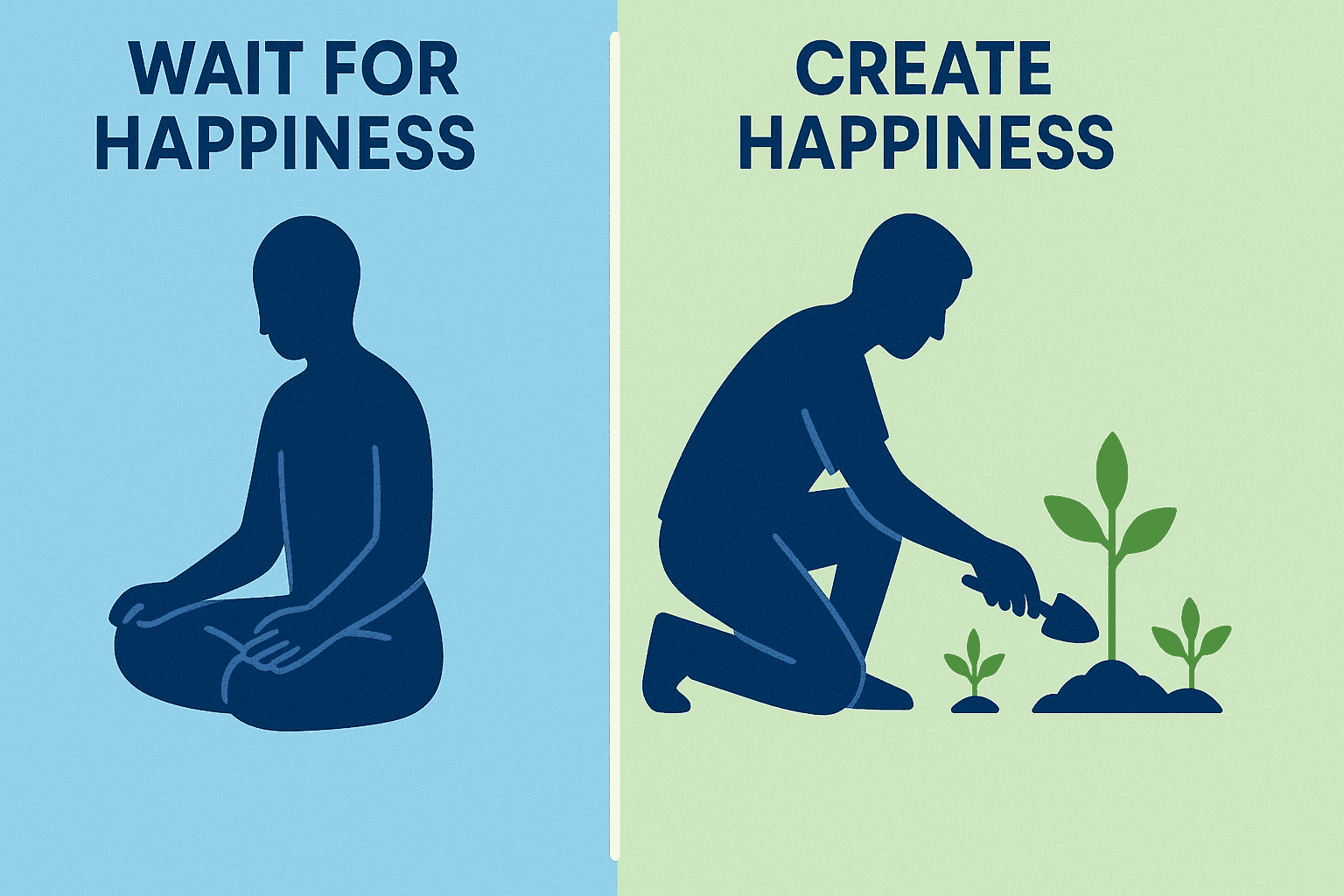
Split image of someone waiting for happiness to come to them versus creating it for themself

"Happiness is not something readymade. It comes from your own actions."

— Dalai Lama

The 14th Dalai Lama, Tenzin Gyatso (born 1935), is the spiritual leader of Tibetan Buddhism and a globally recognized advocate for peace, compassion, and human rights. Forced into exile from Tibet in 1959, he has lived in India while traveling worldwide to promote interfaith harmony, environmental responsibility, and scientific inquiry. Awarded the Nobel Peace Prize in 1989, the Dalai Lama blends traditional Buddhist wisdom with modern insights, emphasizing that happiness arises from mental discipline and compassionate action rather than external circumstances.

Mindfulness and Peace
Personal Growth
Love and Relationships

Context

This quote distills a central tenet of Buddhist philosophy while making it accessible to a modern audience: happiness isn't a product to be purchased or a destination to be reached, but a state that results from intentional behaviors and mental training. The Dalai Lama, who has experienced both the privileges of his position and the hardships of exile, speaks from direct observation that external circumstances don't determine contentment. Instead, happiness emerges from cultivating positive mental states through meditation, practicing compassion toward others, and making ethical choices. This perspective is both empowering and challenging—it places responsibility for our happiness within our control while requiring consistent effort rather than passive consumption.

Today's Mantra

I create my happiness through mindful actions and compassionate choices.

Reflection Question

When have you experienced happiness that clearly resulted from your own actions rather than external circumstances? Conversely, when have you waited for happiness to come from outside sources, and how effective was that approach?

Application Tip

Create a "Happiness Actions" practice by identifying three categories of actions that reliably increase your sense of well-being: one that benefits your body (perhaps a form of movement), one that benefits your mind (perhaps a learning or creative activity), and one that benefits others (perhaps a form of service or connection). Commit to performing at least one action from each category weekly. Keep a simple log noting which actions you took and how they affected your mental state. After a month, review your log to identify patterns about which specific actions most consistently generate happiness.