
Resilience & Courage

Recent Content

Writing to Find Out

Writing to Find Out

Post

Flannery O'Connor believed writing was how she found out what she truly thought. Discover what this reveals about the power of putting ideas into words.

The Art of Failing Better

The Art of Failing Better

Post

Samuel Beckett wrote the most famous instruction for anyone who has ever failed. Discover why trying again after failure is the only move that actually matters.

The Only Life You Have

The Only Life You Have

Post

Kazuo Ishiguro writes about the lives we did not choose. Discover why accepting the life you are actually living is its own form of quiet courage.

Habit Over Inspiration

Habit Over Inspiration

Post

Octavia Butler knew inspiration is unreliable. Discover why the writers and creators who last are the ones who show up by habit, not by feeling.

The Hardest Thing to See

The Hardest Thing to See

Post

George Orwell believed clarity is an act of courage. Discover how seeing things plainly -- and saying so -- transforms both your thinking and your life.

See All Content
Terms and ConditionsDo Not Sell or Share My Personal InformationPrivacy PolicyPrivacy NoticeAccessibility NoticeUnsubscribe
Copyright © 2026 Inspirational Quotes

Redefine Your Impossible

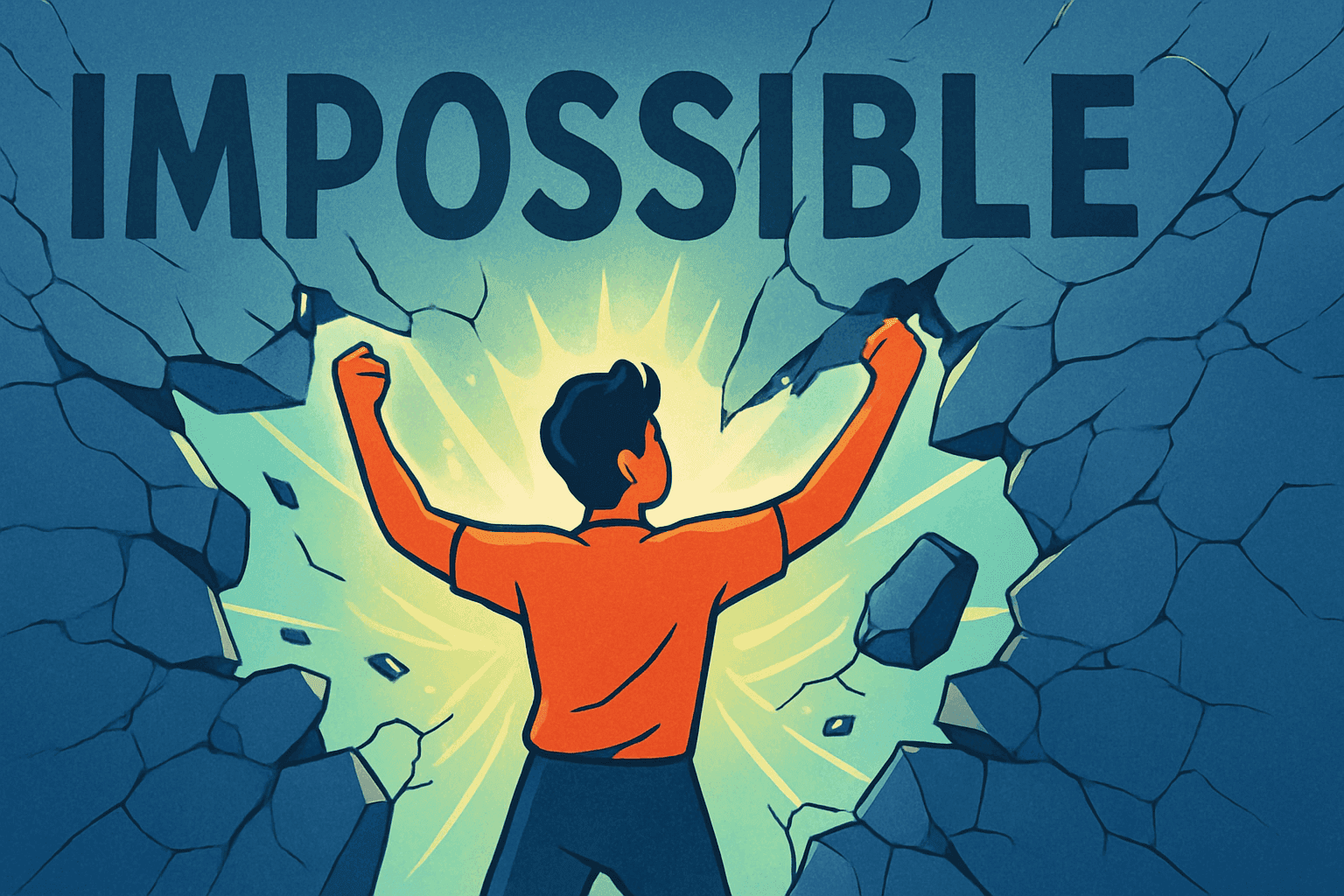
Inspirational image for quote

"Impossible is just a big word thrown around by small men who find it easier to live in the world they've been given than to explore the power they have to change it. Impossible is not a fact. It's an opinion."

— Muhammad Ali

Muhammad Ali (1942-2016) was an American professional boxer, activist, and cultural icon widely regarded as one of the greatest athletes of all time. Born Cassius Clay, he won the world heavyweight championship three times and became famous for his lightning-fast footwork, powerful punches, and equally sharp wit. Beyond boxing, Ali was a passionate advocate for civil rights, religious freedom, and humanitarian causes. He refused induction into the U.S. military during the Vietnam War on religious and ethical grounds, risking his career and freedom. Ali's courage to stand by his convictions, combined with his unshakeable self-belief and charismatic personality, made him a global symbol of resilience, conviction, and the power of believing in yourself against all odds.

RESILIENCE AND COURAGE
BELIEF
POSSIBILITY

Context

Ali spoke these words as someone who repeatedly defied expectations and broke through barriers others deemed unbreakable. His declaration strips "impossible" of its authority by reframing it as subjective opinion rather than objective reality. The phrase "small men" doesn't refer to physical stature but to limited thinking—people who accept boundaries without questioning them. Ali understood that most impossibilities are socially constructed constraints, not natural laws. His own life proved this: a Black man from Louisville became the world's most famous athlete, converted to Islam when it was controversial, refused military service on principle, and returned to boxing after years of forced exile. Each achievement was labeled impossible before he accomplished it. This quote challenges us to examine which "impossibilities" we've internalized and whether they're facts or merely widely held opinions we've never questioned.

Today's Mantra

I question limits and explore the power I have to change my world.

Reflection Question

What "impossible" dream have you dismissed without truly testing its boundaries? Are you accepting someone else's opinion of what's achievable as if it were a universal truth? What would you attempt if you treated "impossible" as merely a starting opinion to be challenged?

Application Tip

Select one goal you've labeled "impossible" and conduct an "Impossibility Audit." Write down every reason you believe it can't be done, then examine each objection critically: Is this a law of physics or someone's opinion? Has anyone else done something similar? What would need to change to make it possible? Often, you'll discover that "impossible" actually means "difficult," "unprecedented in my circle," or "requiring resources I don't currently have." Once you see these as solvable problems rather than absolute barriers, impossibility transforms into a challenging but navigable path forward.