
Resilience and Courage

Recent Content

Writing to Find Out

Writing to Find Out

Post

Flannery O'Connor believed writing was how she found out what she truly thought. Discover what this reveals about the power of putting ideas into words.

The Art of Failing Better

The Art of Failing Better

Post

Samuel Beckett wrote the most famous instruction for anyone who has ever failed. Discover why trying again after failure is the only move that actually matters.

The Only Life You Have

The Only Life You Have

Post

Kazuo Ishiguro writes about the lives we did not choose. Discover why accepting the life you are actually living is its own form of quiet courage.

Habit Over Inspiration

Habit Over Inspiration

Post

Octavia Butler knew inspiration is unreliable. Discover why the writers and creators who last are the ones who show up by habit, not by feeling.

The Hardest Thing to See

The Hardest Thing to See

Post

George Orwell believed clarity is an act of courage. Discover how seeing things plainly -- and saying so -- transforms both your thinking and your life.

See All Content
Terms and ConditionsDo Not Sell or Share My Personal InformationPrivacy PolicyPrivacy NoticeAccessibility NoticeUnsubscribe
Copyright © 2026 Inspirational Quotes

In Spite of Everything

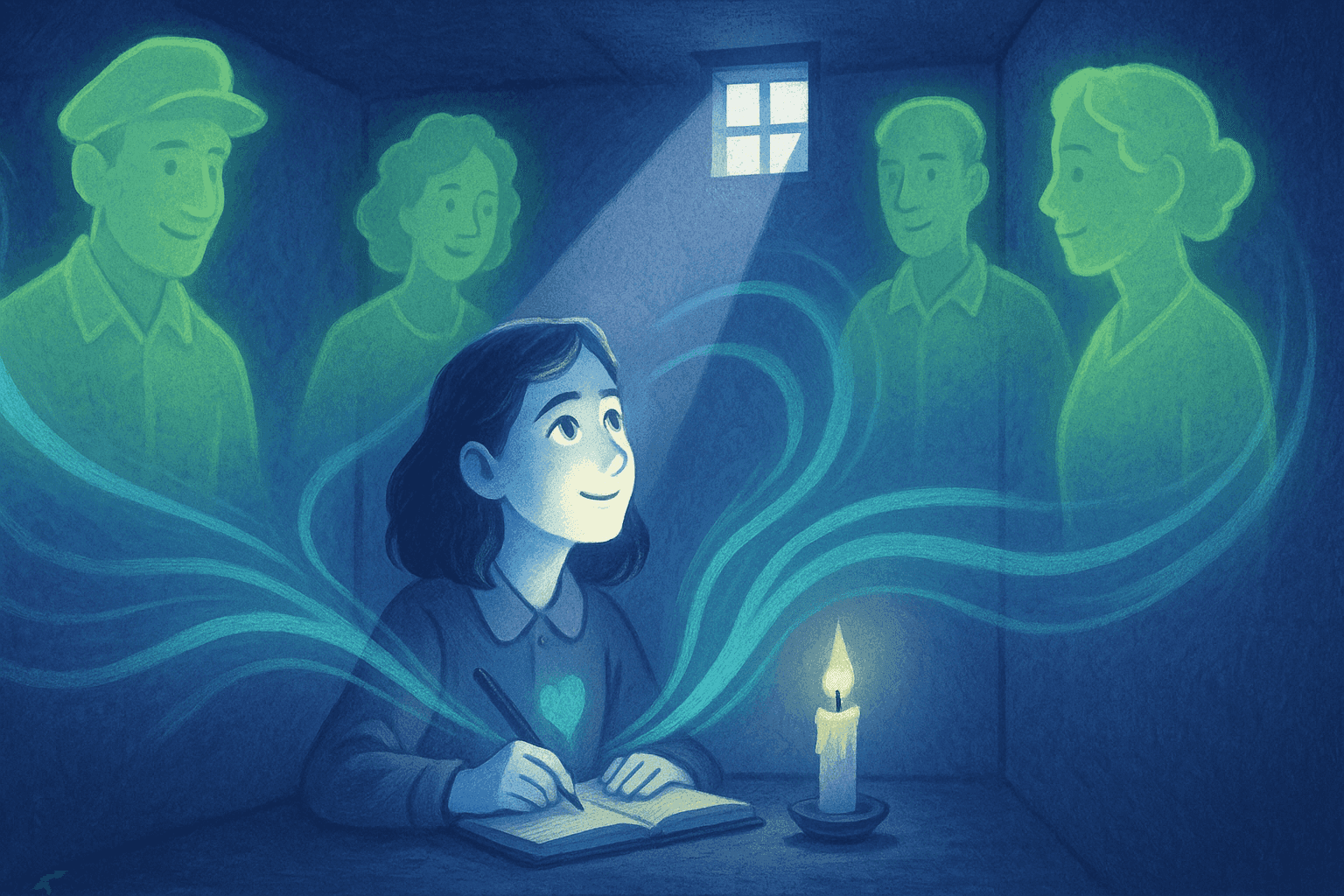
Inspirational image for quote

"In spite of everything, I still believe that people are really good at heart."

— Anne Frank

Anne Frank (1929-1945) was a Jewish teenage girl who documented her experiences hiding from Nazi persecution in Amsterdam during World War II. Born in Frankfurt, Germany, her family fled to the Netherlands in 1933 after Hitler's rise to power. At thirteen, Anne began keeping a diary she named "Kitty," writing about daily life, her thoughts, fears, and dreams while confined to a secret annex for over two years with seven others. Her diary, discovered and preserved after her arrest and death in Bergen-Belsen concentration camp, became one of the world's most widely read books, translated into over seventy languages. Anne's extraordinary voice—simultaneously ordinary teenager and profound thinker—transformed how we understand the Holocaust, humanizing statistics through intimate, authentic testimony that continues inspiring millions worldwide.

RESILIENCE AND COURAGE
HOPE
HUMANITY

Context

Anne wrote these words on July 15, 1944, less than three weeks before Nazi police discovered their hiding place. Fully aware of the Holocaust's horrors—hearing air raids, knowing millions were being murdered—she chose hope over despair. This wasn't naive ignorance but deliberate, radical optimism in humanity's fundamental goodness. Anne witnessed how helpers risked their lives daily to protect strangers, saw kindness persist amid cruelty, and chose to believe in people's essential nature despite overwhelming evidence of evil. Her statement remains controversial; some argue events proved her tragically wrong. Yet others see profound wisdom: she refused to let hatred define humanity's story. Anne's faith wasn't in human perfection but in our capacity for goodness, even when obscured by terrible circumstances. Her words challenge us to maintain hope not because reality justifies it, but because despair serves no one.

Today's Mantra

I choose to believe in human goodness despite witnessing human failings.

Reflection Question

When has someone shown you unexpected kindness during difficult times? How might your perspective shift if you focused more on human goodness than human failings?

Application Tip

Create a "goodness journal" this week. Each evening, record three acts of human goodness you witnessed—stranger helping someone, friend listening compassionately, coworker going beyond requirements, or your own kind action. Start simple: someone held a door, let you merge in traffic, smiled genuinely. This practice doesn't deny suffering or evil; it trains attention toward goodness that coexists with difficulty. After seven days, review your entries. Notice patterns. Recognize that while news highlights humanity's worst, daily life quietly demonstrates our best. Anne maintained this perspective in a secret annex; we can practice it with far greater freedom. The goal isn't blind optimism but balanced vision that acknowledges both darkness and light, choosing where to direct our focus and energy.