
Mindfulness and Peace

Recent Content

Peace Starts With A Smile

Peace Starts With A Smile

Post

Mother Teresa's simple line on peace shows how one small, deliberate act can shift your entire day.

Sun Tzu on Notification Overload

Sun Tzu on Notification Overload

Post

Sun Tzu never saw a lock screen, but he knew what happens when you fight every battle at once. A 2500-year-old fix for your buzzing phone.

Success Measured In People

Success Measured In People

Post

Michelle Obama redefines success as impact on others, not income—here's why that shift changes how you lead and live.

Ease Is The Real Threat

Ease Is The Real Threat

Post

Denzel Washington's blunt line on ease vs. hardship shows why comfort quietly stalls growth more than struggle ever does.

Thinking For Yourself Aloud

Thinking For Yourself Aloud

Post

Coco Chanel's blunt take on courage shows why speaking your real thoughts out loud is braver than staying quietly agreeable.

See All Content
logo
  • Success & Leadership
  • Mindfulness & Peace
  • Love & Relationships
  • Personal Growth
  • Creativity & Purpose
  • Resilience & Courage
  • About Us
  • Success & Leadership
  • Mindfulness & Peace
  • Love & Relationships
  • Personal Growth
  • Creativity & Purpose
  • Resilience & Courage
  • About Us
  • ​

The Necessity of Emptiness

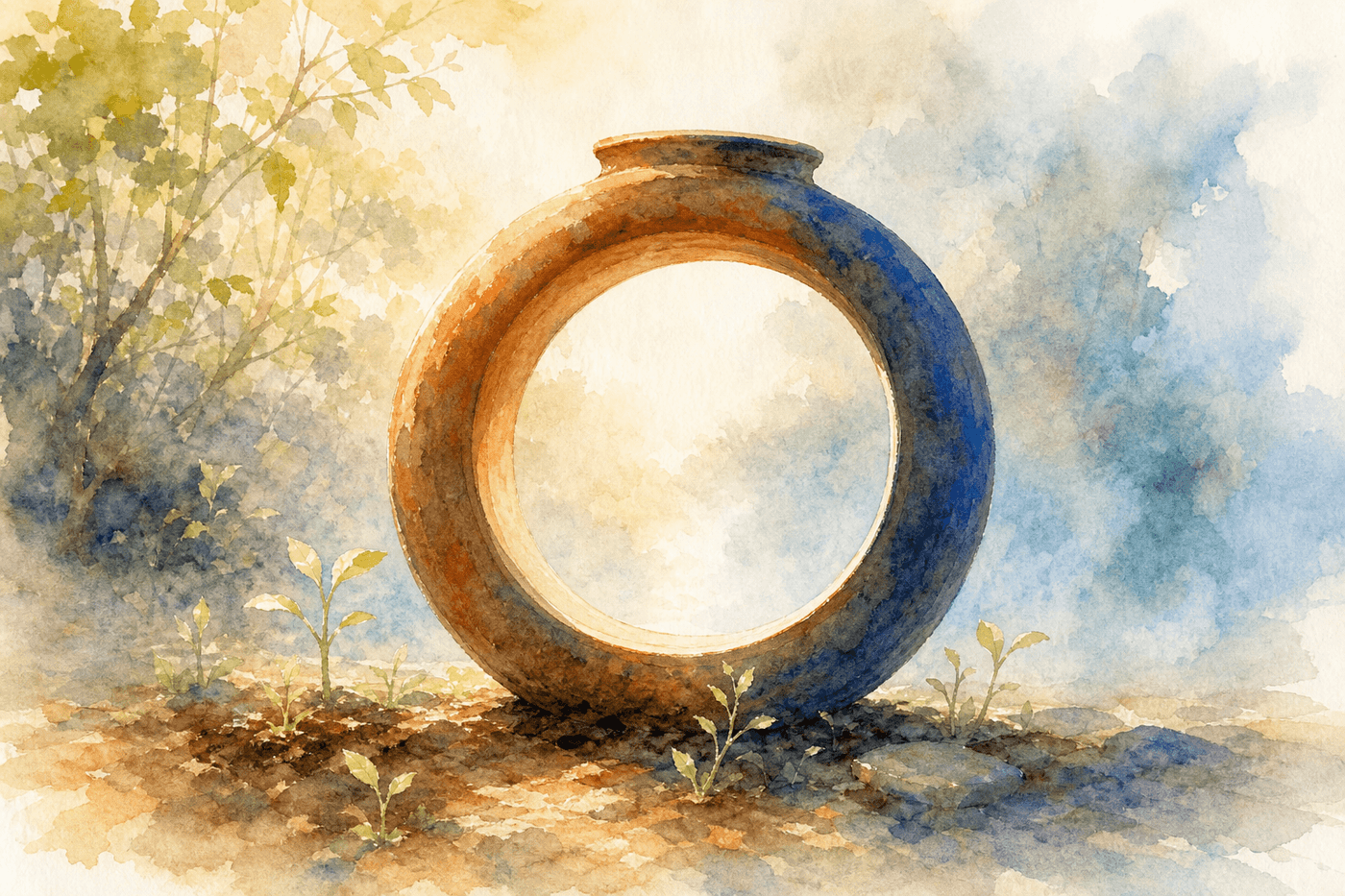
Inspirational image for quote

"We shape clay into a pot, but it is the emptiness inside that holds whatever we want."

— Lao Tzu

Lao Tzu (6th century BCE) is the legendary Chinese philosopher credited with founding Taoism and authoring the Tao Te Ching, one of the most translated works in world literature. Little is known with certainty about his life; tradition holds he was a contemporary of Confucius and served as keeper of the imperial archives before retreating into obscurity. His teachings emphasize wu wei (effortless action), the balance of opposites, and the paradoxical power found in yielding, softness, and emptiness. His influence extends across Eastern philosophy, shaping centuries of thought on harmony, natural order, and the relationship between being and non-being.

MINDFULNESS AND PEACE
SPACE
SIMPLICITY

Context

This passage appears in Chapter 11 of the Tao Te Ching, where Lao Tzu uses three material examples—pots, windows, and wheels—to illustrate a foundational Taoist principle: utility depends not on substance but on absence. The clay gives the pot form, but without the hollow interior, it cannot hold water. The walls frame a room, but without empty space within, it cannot shelter anyone. Lao Tzu wrote during the Warring States period, a time of violence and rigid hierarchies, and his teaching was radical: what matters most is often invisible, unspoken, and unoccupied. This applies beyond objects—to schedules, conversations, identities. Fullness depends on emptiness. Capacity requires space. Function follows form only when form knows how to leave room.

Today's Mantra

I create space so something meaningful can enter.

Reflection Question

Where in your life have you mistaken accumulation for capacity—filling every hour, relationship, or thought until there's no room left for what actually matters?

Application Tip

Today, identify one area where you've prioritized fullness over function. It could be your calendar, your living space, a conversation habit, or your mental load. Deliberately create emptiness: cancel one commitment, clear one surface, leave five seconds of silence before responding in your next conversation. Don't replace what you remove. Let the space remain open and unused. Notice what that absence makes possible—whether it's rest, clarity, or the ability to receive something you didn't plan for. Emptiness isn't lack. It's the condition for holding anything at all.

Terms and ConditionsDo Not Sell or Share My Personal InformationPrivacy PolicyPrivacy NoticeAccessibility NoticeUnsubscribe
Copyright © 2026 Inspirational Quotes